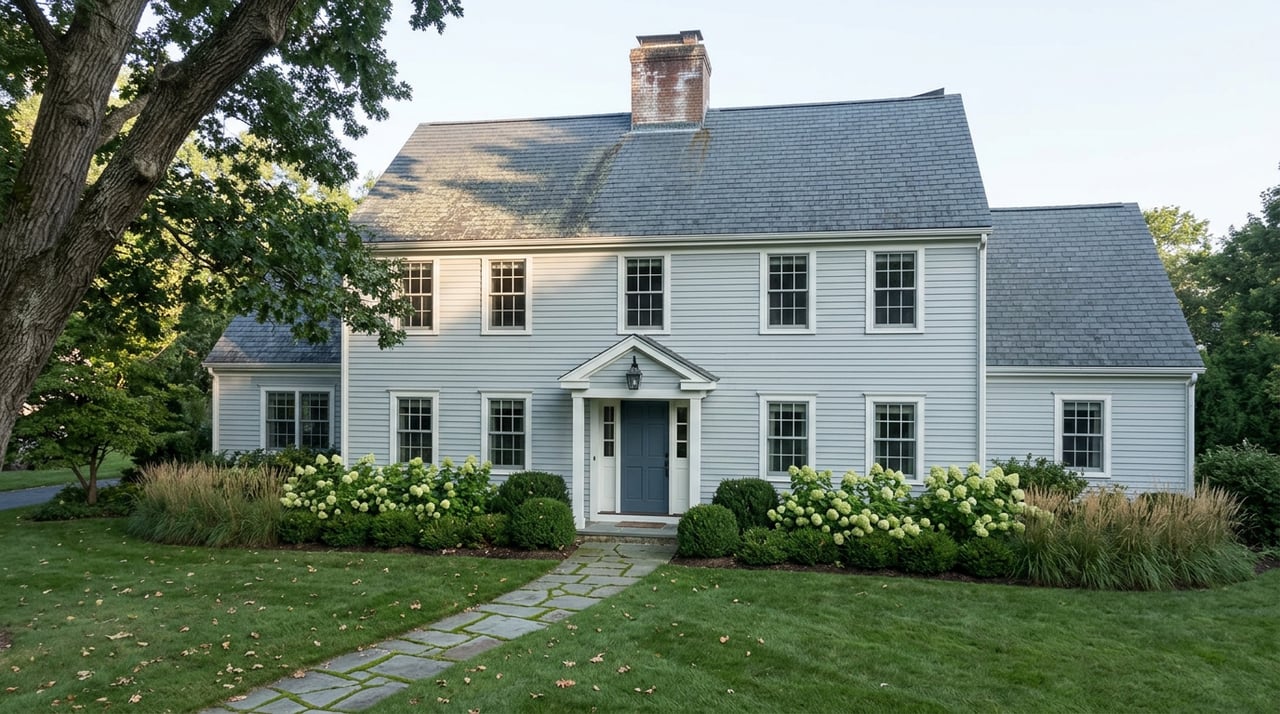
The inspection report lands three or four days after the offer is accepted, and for a lot of buyers under contract on a home in the City of Grosse Pointe, that's when the real negotiation starts. A sewer scope turns up root intrusion in a clay lateral. The panel is original 60-amp service with a section of knob-and-tube still live in the attic. A trickle of water pressure in the upstairs bath traces back to galvanized supply lines narrowing from the inside out. None of this shows up on the listing sheet, and none of it correlates with the price. It correlates with the year the house was framed.
That's the piece most comparison shopping misses. Two homes at the same price point in two different Grosse Pointe communities can carry very different inspection risk, because the thing that predicts what your inspector will flag isn't square footage or list price. It's vintage.
The Number That Matters More Than the Listing Price
Census-derived estimates put the median construction year for the City of Grosse Pointe at 1938, with roughly 60 percent of the housing stock built before 1940. That's not unusual for this pocket of the Pointes. Grosse Pointe Park sits at the same median, 1938, with a nearly identical share of pre-1940s construction. But move a few miles up Lake Shore and the numbers shift. Grosse Pointe Woods has a median build year of 1953. Grosse Pointe Shores comes in later still, at 1961, reflecting a build-out that happened mostly after the war rather than before it.
That fifteen-to-twenty-year gap matters more than it sounds like it should, because it's roughly the window in which residential wiring, plumbing, and sewer materials changed nationally. A home built in 1938 was very likely wired and plumbed with the materials common to that decade. A home built in 1961 usually was not. So when a buyer cross-shops a $600,000 listing in the City of Grosse Pointe against a similarly priced home in Grosse Pointe Woods, they're not comparing two versions of the same risk. They're comparing a pre-war system to a mid-century one, and the inspection reports will read differently even if the square footage and the asking price line up almost exactly.
What Vintage Actually Shows Up As, on an Inspection Report
None of this is unique to any one address. It's a pattern that repeats across pre-1940s housing stock generally, and it shows up consistently in Grosse Pointe specifically because so much of the city's inventory falls in that window. The categories an inspector is statistically likely to raise on a home from this era include:
- Electrical systems from before grounding was standard. Knob-and-tube wiring, cloth-insulated branch circuits, and undersized panels are common enough in homes of this vintage that a licensed electrician's follow-up evaluation is a routine ask, not a red flag on the house specifically.
- Water supply lines that narrow with age. Galvanized steel and, in some cases, lead water service lines were standard practice into the mid-twentieth century. They corrode from the inside, which is why low pressure at an upstairs fixture in an older Grosse Pointe home often traces back to the supply line rather than the fixture itself.
- Sewer laterals vulnerable to root intrusion. Grosse Pointe's tree-lined streets are part of its character, and they're also why clay and cast-iron sewer laterals on older lots have had decades for mature root systems to work into joints and cracks. A local plumbing contractor that serves the Pointes has noted that sewer line calls are among the most common they field in this market, driven by exactly that combination of aging pipe and mature tree canopy.
- Original gas piping and combustion venting. Black iron gas lines and older furnaces or boilers sitting in tight basements can raise venting and combustion-air questions that a newer mechanical system wouldn't.
None of this means a pre-1940s Grosse Pointe home is a bad purchase. It means the inspection contingency period on one of these homes tends to do more work than it does on a newer build, and a buyer who understands that going in negotiates from a stronger position than one who is caught off guard by it.
The City Already Tells You What to Check
What sets Grosse Pointe apart from a generic old-house inspection checklist is that the city itself publishes guidance pointing at the exact same risk. The Grosse Pointe Water and Sewer Department's own materials recommend having a specialized camera inspection of a home's sewer lateral, what the city calls the house lead, completed before buying a home, precisely because that line is a common point of failure in older infrastructure. The same page walks residents through a maintenance rhythm of cabling the sanitary line twice a year, once in spring before heavy rains and once in fall, which tells you how routine this issue is for people who already own here.
The city also enforces a downspout disconnection ordinance requiring roof downspouts to be routed away from the sanitary sewer system rather than into it, a measure meant to reduce backups during heavy rain. That requirement gets checked two ways: through the exterior inspection program that cycles through the entire city over four years, and through the Certificate of Occupancy inspection triggered whenever a home changes hands. In practical terms, that means a downspout disconnection can show up as a punch list item during the sale process itself, not just as a routine maintenance note somewhere down the line.
Between the sewer camera recommendation and the downspout requirement tied to the point of sale, the city's own published guidance functions almost like a preview of what a private inspector is going to look for anyway. A buyer who reads it before the inspection, rather than after, tends to be less surprised by what comes back.
Why This Changes the Comparison Shopping Math
Put the pieces together and the thesis is simple: build year is doing more predictive work than price in this market, and buyers who shop purely on the number in the listing are comparing homes that aren't actually comparable. A $650,000 home in the City of Grosse Pointe and a $650,000 home in Grosse Pointe Woods can sit at the same price point and carry meaningfully different odds of a knob-and-tube finding, a galvanized supply line, or a sewer scope recommendation, simply because one was built in an era before those materials fell out of use and the other wasn't.
That doesn't argue against buying in the city's older housing stock. It argues for budgeting differently going in. A buyer working with a Grosse Pointe-specific inspector, the kind who can name the pattern of stone or unreinforced brick foundations, original black iron gas lines, and knob-and-tube wiring found across this vintage of home, is better positioned to turn inspection findings into a phased plan rather than a closing-table crisis. Adding a sewer scope to the inspection scope from the outset, rather than treating it as an optional extra, is one of the more direct ways to convert the city's own published advice into leverage during negotiation.
Questions Grosse Pointe Buyers Ask Before They Write an Offer
Does a pre-1940s build year mean the home definitely has knob-and-tube wiring or a lead sewer lateral? No. It means the odds are higher than in a newer home, not that every older Grosse Pointe home has these systems still in place. Plenty have been updated over the decades. The build year tells you what to specifically ask an inspector to check, not what you'll definitely find.
Is a sewer camera inspection required by the city before I can close? The city's guidance frames it as advisable before buying a home, not as a closing requirement. The downspout disconnection check tied to the Certificate of Occupancy inspection at sale is the piece that is enforced at that stage.
Does an older build year mean a home is a worse investment than a newer one? Not on its own. It means the inspection and negotiation phase of the transaction is likely to carry more weight, and that a buyer's budget should account for phased system updates the way it would for any home with original infrastructure. Plenty of buyers choose the City of Grosse Pointe specifically for the architecture and lot character that come with that era of construction.
If you're comparing homes across the Pointes and want to understand what a specific property's age and infrastructure actually mean for your offer and your inspection strategy, Shana Sine Cameron has spent more than 28 years reading these transactions from the inside. Schedule your free consultation to talk through the specific home, and the specific vintage, you're considering.


